
Digital Transformation
Legacy System Modernization Services: Replace One Workflow, Keep the Record
Published Feb 28, 2026. Updated Oct 14, 2026
Legacy system modernization services replace one failing workflow and leave the legacy record live. The old system stays up.
Legacy System Modernization Services: Replace One Workflow, Keep the Record
Legacy system modernization services replace one workflow that fails, while the legacy record stays live. I do not start by cutting the old system over in one night. I name the workflow, I keep the record, and I refuse a big-bang replacement.
The real problem
The legacy system is blamed for every delay. The proposal is to turn it off. The business still closes the day on that record. The thing that actually fails is usually one workflow in front of it: a handoff, an intake, a screen people cannot finish. Replacing the record to fix the handoff throws away the part that still tells the truth.
HIPnation is the file I will use for that split. It is a membership-medicine group. Inbound patients were getting lost between the phone, the inbox and the EHR. The EHR was the legacy record. Elation and Hint stayed. The workflow that failed was the funnel. We replaced that workflow. A Dialpad comms hub on the conversation side. Deterministic patient-to-conversation linkage. Every inbound acknowledged in under a minute and booked inside the conversation. The result is +28% patient leads, Feb to Jul 2026. The legacy record did not get switched off. The workflow in front of it did.
The other file is not a legacy cutover, and I will not pretend it was. A $3.4M React Native engagement. Expo plus Expo Router on the web. at.tv and DirecTV shipped from one codebase. The screens already existed. The temptation was a second system beside them. The work was to refuse that second system. The second brand is a theme. The screens stay shared. A big-bang replacement of a codebase that already worked would have been the same mistake as turning off an EHR that already held the chart.
I do not add a headcount, a timeline, a quote, or a savings figure on top of either file.
I am writing to the operator who still runs the day on a record they trust, and who is being sold a cutover. On this site, that buyer is named on AI-native SaaS for PE and mid-market.
Principles
Replace the workflow. Leave the record live. Legacy system modernization services go wrong when the first picture is a new platform under the data. The first picture is the workflow that fails, and the record that has to stay true while the business runs. On HIPnation the record was the EHR. The workflow was the funnel.
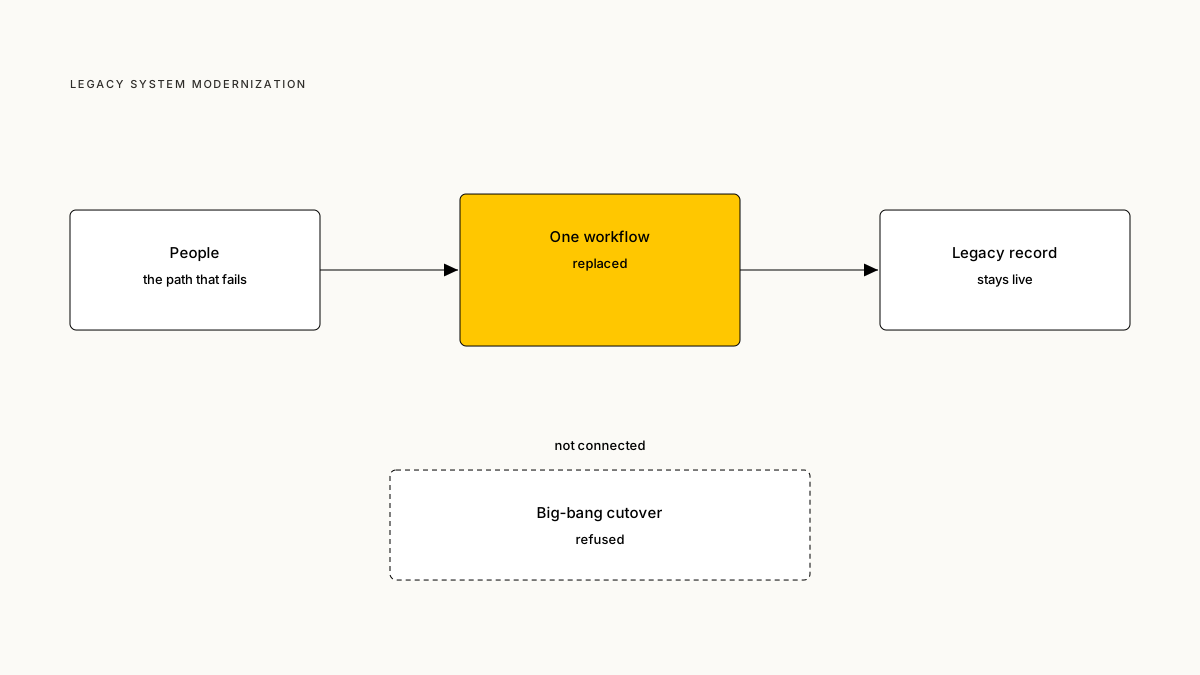
A big-bang cutover is a new product. Turning the old system off in one night asks the company to trust a record that does not exist yet. I will not draw that as a phase. I draw it as a dashed path, and I refuse it. If the brands, or the departments, do not share the record, you do not have a modernization. You have a second system.
The number has to survive the legacy record. On the HIPnation funnel the patient and the conversation are the same chain, and the chart stayed Elation and Hint. The +28% patient leads, Feb to Jul 2026, sits on that chain. A modernization plan whose number only exists in the new system is a story about a system you have not earned.
Do not modernize a screen that should have stayed shared. The React Native engagement already had the screens. A second website would not have modernized a legacy app. It would have forked it. Expo plus Expo Router on the web kept the screens. I will not call a fork a legacy program.
When the website is the product, do not force the legacy screen through a phone primitive set. A document site, or a portal with no mobile twin, belongs in a web framework. That work is React and Next.js.
How we actually build it
I name the workflow that fails. I name the legacy record that stays live. I replace the workflow. I do not schedule a night when the old record goes dark.
On HIPnation the record stayed. Elation and Hint stayed. The phone and the inbox stayed as sources. The new object was the funnel between them. Acknowledge every inbound in under a minute. Book it inside the conversation. Keep the linkage deterministic so a second person can see that this patient and this conversation are the same chain. The result I will attach is +28% patient leads, Feb to Jul 2026.
I will not publish a 14-week playbook. I do not have a file that is a universal duration, and a borrowed phase chart would be a metric I made up. The figure on this page is the boundary. One workflow replaced. The legacy record stays live. The big-bang cutover is refused.
The React Native file is the check on the other temptation. The screens were the record of the product. A second system beside them was the cutover in disguise. We did not take it.
What we learned
The two files taught me to keep the old record when the old record is true.
HIPnation's +28% patient leads, Feb to Jul 2026, came from the funnel in front of an EHR we did not replace. Phone, inbox, chart. Acknowledgment in under a minute. Booking inside the conversation. The legacy system was not the villain. The missing workflow was.
The $3.4M React Native engagement taught me that a second system can be sold as modernization of the first. The screens stayed. The theme changed. PoCs win buy-in. Enterprises stay slow to align. I will not add a headcount, a timeline, or a savings figure to make a cutover look safer than it is.
I will not average the two files into one outcome. A membership-medicine funnel and a two-brand codebase are different objects.
There is a third file, and the legacy record there was already dead. Fox and American Idol. A vendor ad-split site had crashed on show night. We rebuilt it as a custom CMS with realtime CDN votes. Three seasons. No crash. That was a replacement of an edge that had already failed, not a reason to turn off a record that still closes the day. I will not mix that rescue into the HIPnation file and call both a cutover.
When this isn't the right fit
It is the wrong work when the legacy record is already false, or already down, and the business cannot close the day on it. That is a rescue. Say so. Do not dress it up as a gentle modernization.
It is the wrong work when the ask is to turn every system off in one pass. I have no file that supports that.
It is the wrong work when a product you can already buy runs the workflow, including the record and the owner.
It is the wrong work when the company is small and the object is one workflow a person already does by hand. That fit is AI automation services for small business. The unit there is a workflow, not a legacy program.
It is the wrong work when the thing you want from this page is a price, a headcount of companies still on old systems, or a week-by-week cutover. I do not publish those.
Frequently asked questions
What are legacy modernization services?
Legacy system modernization services replace one workflow that fails and leave the legacy record live. The business keeps running on that record. A cutover that turns the old system off in one night is a different project, and I do not have a file that supports it.
How many companies still use legacy systems?
I do not have a count, and I will not invent one. The file I can describe is one company. HIPnation kept Elation and Hint as the system of record and replaced the intake. A market statistic would be a number I made up.
Is replacing a legacy system worth IT?
Replacing the whole legacy system in one cutover is the move I refuse first. If the record is still true, replacing it is a new product. HIPnation kept the EHR. The intake was the workflow that failed. The result I can attach is +28% patient leads, Feb to Jul 2026. I will not attach a savings figure and call the replacement worth it.
How to modernize a legacy system?
Name the workflow that fails. Keep the legacy record live. Replace that workflow. Refuse a big-bang cutover. On HIPnation the record was Elation and Hint. The workflow was the funnel between the phone, the inbox, and the chart. A Dialpad comms hub sat on the conversation side. The patient and the conversation were linked, so the number stayed true.
Written by Anthony Wentzel