
Digital Transformation
Digital Transformation Strategy: Name One Workflow, Then Stop
Published Apr 16, 2026. Updated Oct 14, 2026
A digital transformation strategy names one workflow the bought tools cannot hold, then changes that workflow.
Digital Transformation Strategy: Name One Workflow, Then Stop
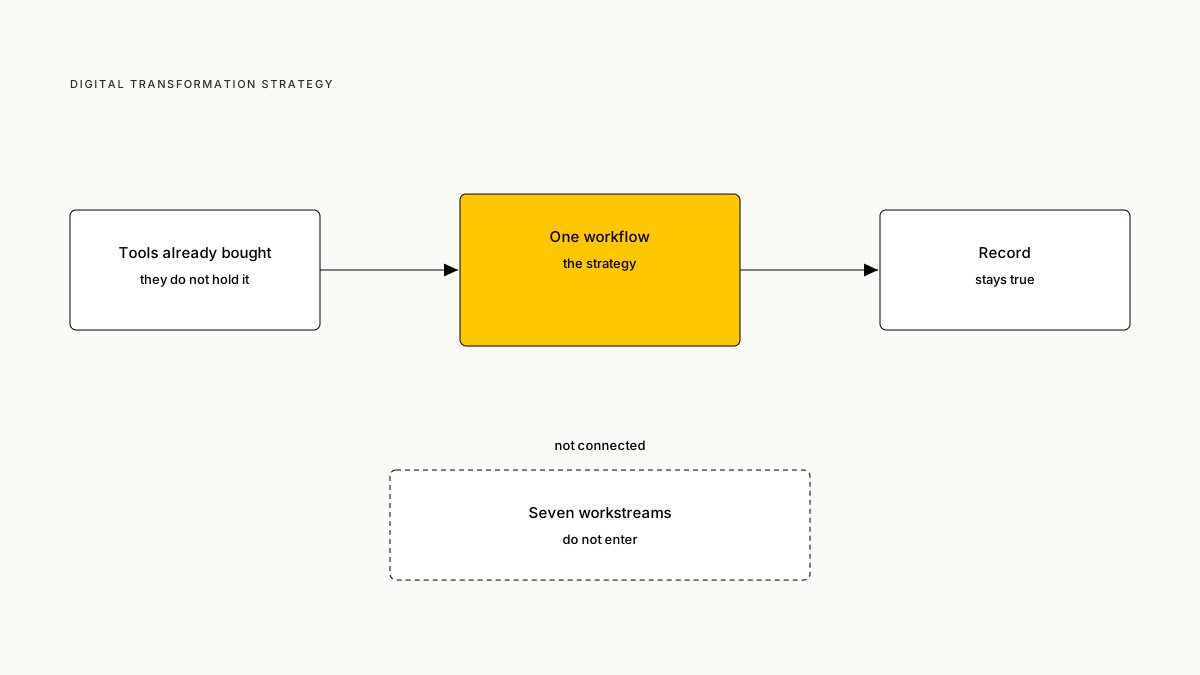
A digital transformation strategy names one workflow the tools a company already bought cannot hold, then changes that workflow. I start with the workflow, the owner, and the record. I do not start with a slide of workstreams. A deck without that sentence is not a strategy.
The real problem
The offsite produces seven workstreams and a 90-day calendar. Each box can look finished. None of them says which workflow changes on Monday, who owns it, or which record has to stay true while it changes.
HIPnation is the file I will use for a strategy that was a sentence. It is a membership-medicine group. Inbound patients were getting lost between the phone, the inbox and the EHR. The sentence was the patient funnel, from the inbound to a booked conversation. Elation and Hint stayed the system of record. A Dialpad comms hub sat on the conversation side. Every inbound is acknowledged in under a minute and booked inside the conversation. The patient and the conversation are linked deterministically. The result is +28% patient leads, Feb to Jul 2026. That number is true because of the link. A roadmap of workshops would not have made it true.
The other file is a different sentence, and I will not blend the two into a transformation program. A $3.4M React Native engagement. Expo plus Expo Router on the web. at.tv and DirecTV shipped from one codebase. The second brand is a theme. The screens stay shared. The strategy was to refuse a second website. PoCs win buy-in. Enterprises stay slow to align. I will not invent a 90-day grid to hide that gap.
I do not add a headcount, a timeline, a quote, or a savings figure on top of either file.
I am writing to the operator who already bought the tools and still has the gap. On this site, that buyer is named on AI-native SaaS for PE and mid-market.
Principles
Name the workflow before you name the calendar. A digital transformation strategy goes wrong when the first artifact is a 90-day plan. The first artifact is the workflow, in one sentence. For HIPnation the sentence was the patient funnel. If I cannot say the sentence, the calendar is theater.
The owner is part of the strategy. A workflow without an owner does not get changed. It gets a slide. On HIPnation the operating rules were the design. Acknowledge every inbound in under a minute. Book it inside the conversation. Keep the linkage deterministic so the number is the number.
Keep the record that is already true. I do not start by replacing the system of record because the handoff is messy. Elation and Hint stayed. The new object was the funnel between the inbox and the chart. A strategy that opens with a new platform under the data is a purchase, not a change.
Buy the product when the product already is the workflow. A lot of work that gets called strategy is a company paying to rebuild a workflow a product already runs. If the steps, the record, and the owner match what you can subscribe to, building is a way to pay twice. When the question is a connector chain against software of your own, the comparison is Zapier vs custom AI agents.
A proof gets a nod. It does not finish the alignment. PoCs win buy-in. Enterprises stay slow to align. I will not invent a quarter to hide that gap. When the missing piece is an owner for which workflow goes first, and the platform is already stable, that is a different seat. It is not a longer deck.
How we actually build it
I write the workflow in one sentence. I name the owner. I name the record that stays. Then I change that workflow, and I stop adding workstreams.
On HIPnation we rebuilt the funnel as the product. The phone, the inbox, and the EHR were already there. The missing object was the path between them. Deterministic patient-to-conversation linkage is what made the lead number a lead number. The result I will attach is +28% patient leads, Feb to Jul 2026. I will not attach a pillar, a maturity score, or a revenue line.
The React Native engagement was the same discipline on a different object. The screens already existed. The strategy was one codebase. Expo plus Expo Router on the web made the same screens the site. Color, wordmark, and type can change. The screen file does not fork.
A 90-day calendar is useful only after the sentence exists. Before that sentence, the calendar is a way to look busy. I will not publish a day-by-day plan on this page. I do not have a file that is a universal quarter.
What we learned
The two files taught me to keep the claim as small as the file.
HIPnation's +28% patient leads, Feb to Jul 2026, came from the funnel and from the signal under it. Phone, inbox, EHR. Acknowledgment in under a minute. Booking inside the conversation. The strategy was that sentence. It was not seven workstreams.
The $3.4M React Native engagement taught me that refusing a second system can be the whole strategy. It also taught me the limit of a proof. PoCs win buy-in. Enterprises stay slow to align. I will not add a headcount, a timeline, or a savings figure to make that gap look smaller.
I will not average the two files into one outcome. A membership-medicine funnel and a two-brand codebase are different objects. A blended transformation score would be a metric I made up.
When this isn't the right fit
It is the wrong work when a product you can already buy runs the workflow, including the record and the owner.
It is the wrong work when the ask is a 90-day plan for every department. I have no file that supports that. Both files I will stand on are one object.
It is the wrong work when the company is small and the object is one workflow a person already does by hand. That fit is AI automation services for small business. The unit there is a workflow, not a strategy offsite.
It is the wrong work when the thing you want from this page is a price, a pillar diagram, or a Gartner sentence treated as a result. I do not publish those.
Frequently asked questions
What is digital transformation in business?
In a business, digital transformation is the decision to change one workflow the tools already bought cannot hold. The owner and the record are part of that decision. A slide of workstreams, with no workflow in a sentence, is not the change.
What are the four key pillars of digital transformation?
The four pillars people put on a slide are customer experience, operations, the business model, and the organization's ability to change. That is a sorting list from the strategy literature. It is not a sequence from my files. HIPnation was one funnel. The React Native engagement was one codebase. I will not sort either file into four pillars and call that a result.
What actions should companies take to implement the operational elements of digital transformation?
Name the workflow. Name the owner. Keep the record that is already true. Change that workflow, and stop. On HIPnation the operating rules were the design. Acknowledge every inbound in under a minute. Book it inside the conversation. Keep the patient and the conversation linked. A program that changes every department in one pass is not an action I can stand on.
What is digital transformation gartner?
I will not paste a glossary line onto this page and treat it as a measurement from my files. Digital transformation strategy, here, is the decision to change one workflow the bought tools cannot hold. A definition from an analyst firm does not sequence that workflow.
Written by Anthony Wentzel