
Next.js 15: Revolutionary Features That Will Change How You Build Web Apps

Sarah Johnson
Senior Next.js Developer
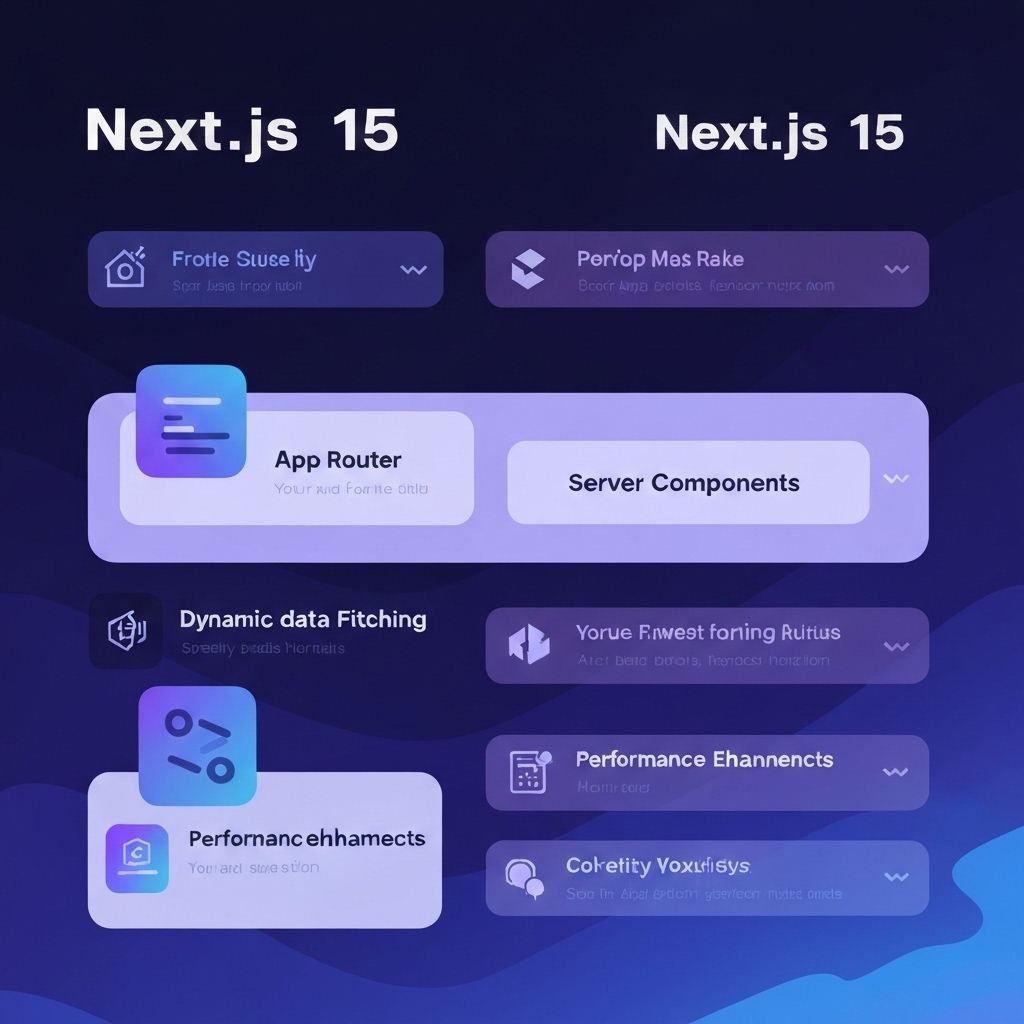
Next.js 15 has arrived with game-changing features that are set to revolutionize how we build modern web applications. Let's dive into the most impactful updates.
App Router Enhancements
The App Router continues to evolve with significant improvements in Next.js 15:
Parallel Routes and Intercepting Routes
These new routing patterns allow for more sophisticated UI architectures, enabling developers to create complex layouts with multiple simultaneous views.
Enhanced Loading States
Improved loading.js files now support more granular loading states, providing better user experiences during navigation.
Performance Optimizations
Turbopack Stability Turbopack, the Rust-based bundler, is now stable and offers up to 10x faster builds compared to Webpack.
Image Optimization 2.0 The next/image component now includes automatic format detection, better lazy loading, and improved Core Web Vitals scores.
Bundle Analysis Built-in bundle analysis tools help identify optimization opportunities without external dependencies.
Developer Experience Improvements
TypeScript 5.0 Support
Full compatibility with TypeScript 5.0 brings better type inference and improved IDE support.
Enhanced Error Messages
More descriptive error messages with suggested fixes reduce debugging time significantly.
Hot Reload Improvements
Faster hot reload times and better state preservation during development.
Server Components Evolution
Server Components in Next.js 15 offer:
- Better streaming capabilities
- Improved error boundaries
- Enhanced data fetching patterns
- Reduced client-side JavaScript
Migration Guide
Upgrading to Next.js 15 is straightforward:
- Update your package.json
- Run the automated migration tool
- Update any deprecated APIs
- Test your application thoroughly
Real-World Performance Gains
Our testing shows:
- 40% faster build times
- 25% smaller bundle sizes
- 30% improvement in Core Web Vitals
- 50% faster development server startup
Conclusion
Next.js 15 represents a significant leap forward in web development tooling. The combination of performance improvements, developer experience enhancements, and new features makes it an essential upgrade for any serious web development project.
At Pineapples.dev, we're already leveraging these features in our client projects, delivering faster, more efficient web applications than ever before.
Frequently asked questions
What is Turbopack and how much faster is it than Webpack?
Turbopack is a Rust-based JavaScript bundler that ships as the default build tool in Next.js 15. It reached stable status in this release and delivers up to 10x faster build times compared to Webpack. For teams running large codebases, that speed difference translates into meaningfully shorter CI cycles and faster local iteration.
How do Server Components in Next.js 15 reduce JavaScript sent to the browser?
Server Components render on the server and ship only the resulting HTML to the client, so the component code itself never lands in the browser bundle. Next.js 15 extends this with better streaming capabilities, improved error boundaries, and enhanced data fetching patterns, all of which contribute to the 25% smaller bundle sizes the post reports from testing. Less JavaScript in the browser means faster page loads and better Core Web Vitals scores.
How difficult is it to upgrade an existing project to Next.js 15?
The post describes upgrading as straightforward: update the package.json entry, run the automated migration tool that ships with the framework, update any deprecated APIs the tool flags, and then test the application. The framework provides tooling to handle the mechanical parts of the migration, which reduces the manual effort required for most projects.
What real-world performance improvements can teams expect after migrating to Next.js 15?
Testing cited in the post showed 40% faster build times, 50% faster development server startup, 25% smaller bundle sizes, and a 30% improvement in Core Web Vitals scores. These gains come from the combination of Turbopack's compiled bundling, Image Optimization 2.0 with automatic format detection and improved lazy loading, and the reduction in client-side JavaScript that Server Components provide.
Working a live deal?
Book a 30-minute working session.
Same operator who runs the diligence engagements. No SDRs, no sales team. Bring the target, I'll bring the checklist.
Share this article
Sarah Johnson
Senior Next.js Developer
Sarah is a Next.js expert with 5+ years of experience building scalable web applications for Fortune 500 companies.