
Cloud Computing
Building Scalable Serverless Applications with Vercel and AWS
Published Jan 3, 2024. Updated Oct 11, 2026
A complete guide to designing and deploying serverless applications that scale automatically and cost-effectively.
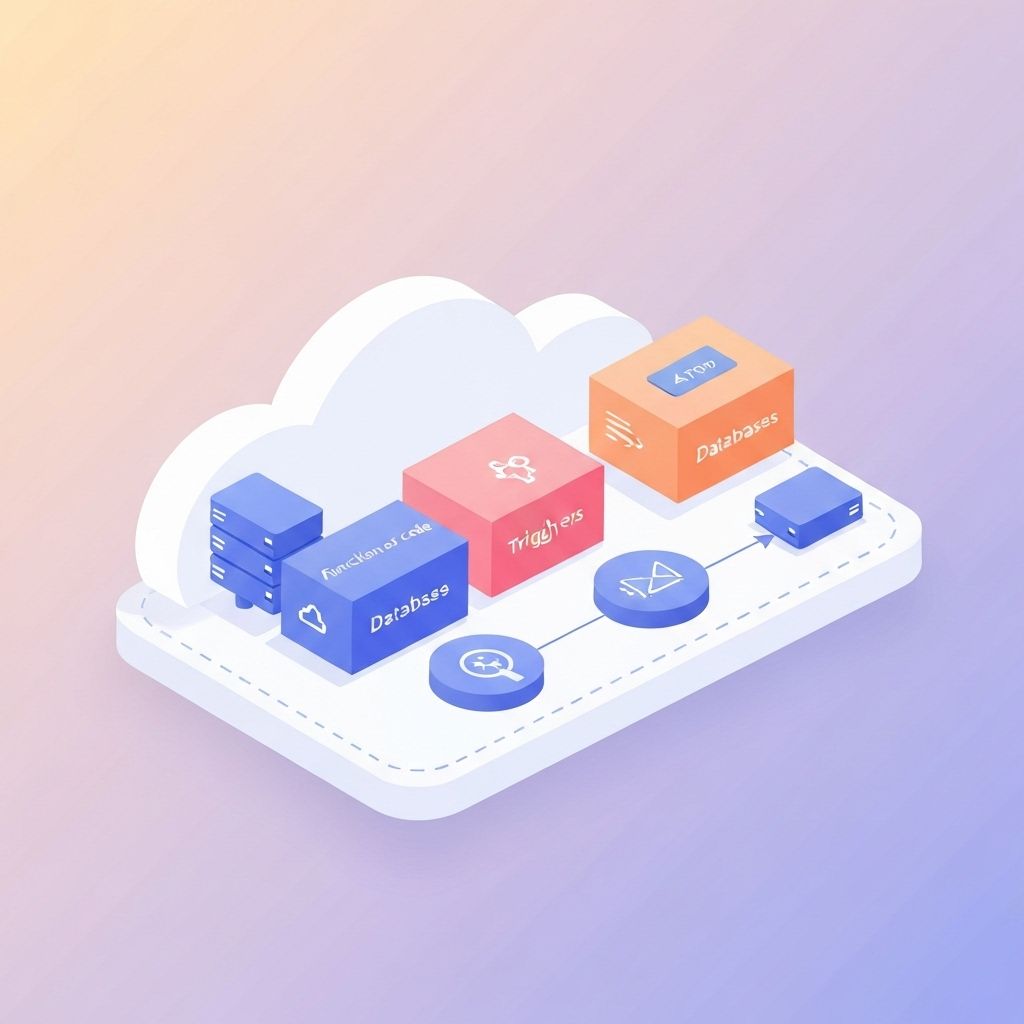
A complete guide to designing and deploying serverless applications that scale automatically and cost-effectively.
Frequently asked questions
What is serverless architecture and how does it differ from traditional cloud hosting?
Serverless architecture lets you deploy application logic without provisioning or managing servers, because the cloud provider handles infrastructure scaling automatically in response to demand. Unlike traditional hosting where you pay for reserved capacity whether or not you use it, serverless can be more cost-effective by charging only for the compute time your code actually consumes. Vercel and AWS both offer serverless runtimes that are commonly used together to cover different layers of a modern application.
How does a serverless application scale automatically?
Serverless platforms like Vercel and AWS spin up new function instances in parallel as incoming requests increase, so capacity grows with traffic rather than requiring manual configuration or pre-provisioning. When demand drops, instances are released and you stop incurring cost for idle capacity. This automatic scaling is one of the primary design goals of serverless architecture, making it well-suited for workloads with variable or unpredictable traffic patterns.
When should I choose Vercel versus AWS for a serverless deployment?
Vercel is optimized for front-end and full-stack web applications, offering tight integration with frameworks like Next.js and a developer experience focused on fast deployments and global edge distribution. AWS provides a broader range of serverless primitives, including Lambda, API Gateway, and event-driven services, which suit backend-heavy or multi-service architectures with complex integration requirements. Many production deployments combine both, using Vercel for the web layer and AWS for backend processing and data services.
What are the main cost and architecture trade-offs of going serverless?
Serverless can reduce infrastructure costs for variable workloads, but high-volume sustained traffic may become more expensive than equivalent reserved or containerized capacity, so the economics depend on your specific load profile. Architecturally, serverless introduces constraints around execution duration, cold-start latency, and statelessness that must be designed around from the start. Evaluating these trade-offs early, before committing to serverless as the primary deployment model, is essential to building applications that scale cost-effectively.
Written by Anthony Wentzel